Impact of Climate Change on Animals
The United Nations Sustainabilty Goals
The United Nation’s list of Sustainable Development Goals aims to combat the negative effects of the climate crisis.
The 17 Sustainable Development Goals
- No Poverty
- Zero Hunger
- Good Health and Well-Being
- Quality Education
- Gender Equality
- Clean Water and Sanitation
- Affordable and Clean Energy
- Decent Work and Economic Growth
- Industry, Innovation and Infrastructure
- Reduced Inequalities
- Sustainable Cities and Communities
- Responsible Consumption and Production
- Climate Action
- Life Below Water
- Life on Land
- Peace, Justice and Strong Institutions
- Partnerships for the Goals
- United Nations
How much does climate change truly impact animal populations that are impacted by poaching and trafficking?
Goal 15: Life on Land addresses issues like deforestation, desertification, and loss in biodiversity by encouraging more sustainable use of land-based ecosystems. This sustainability goal has a smaller target goals within it as a way to make these goals more attainable, with one being in regards to protecting plant and animals. SDG (Sustainable Development Goal) 15, Target 15.7 aims to "Take urgent action to end poaching and trafficking of protected species of flora and fauna and address both demand and supply of illegal wildlife."
Poaching and climate change are negatively impacting wildlife populations, though not always to the same extent. The intersection between target 15.7 and climate change is that illegal wildlife trade and climate change are both impacting wildlife populations, but that they are separate forces that accelerate at different rates and have different impacts.
There is conflicting data from different regions regarding the extent of influence climate change has on animal populations.
One group of researchers looked into whether source-area regions were the best place to return animals who had been exploited by trafficking, even when that region experienced unfavorable global climate change effects meaning it was no longer the same place the animals were forced away from. If seized animals are returned to lands they are not indigenous to then the native animals may suffer problems caused by an invasive species. In this scenario, trafficking is harming animal populations and then climate change is a factor that must be considered when trying to return the previously seized animals back into the environment.
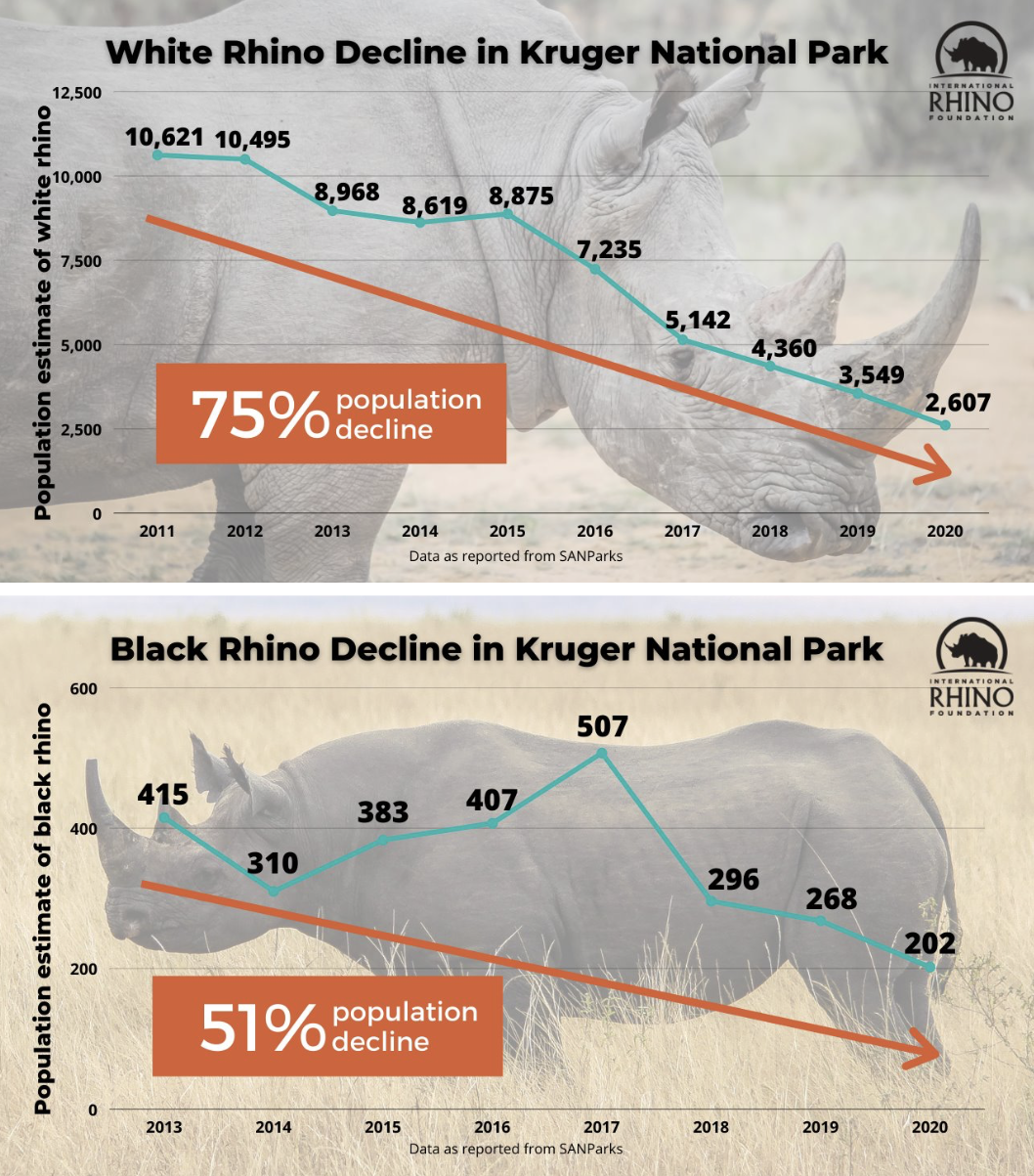
Destro, et al., 2019.A study done in Kruger National Park in South Africa gathered rainfall data and records from park rangers of the annual number of poached rhino carcasses. The census data showed that there was a steady decline in the rhino population after the rate of poaching increased around 2007 and 2008. The authors of the study predict that a 50% decrease in poaching would allow for the rhino population to double by 2030. They found little correlation between climate change effects and population loss. They concluded that poaching and trafficking have a greater impact on rhino populations in South Africa than climate change.
Nhleko, et al., 2022Another source found that found that poaching caused a significant decrease in rhino populations and that droughts also had an impact.
Ferreira, et al., 2019These disagreements among researchers likely stem from their different population study groups as well as the different aspects of climate change they are choosing to focus on. The poaching rates in various areas change year to year based on policy changes and law enforcement effectiveness. Climate change effects continue to occur and alter the environment.
Order of United Nations SDGs I Feel Are Most Important
| Goal | Goal Title | Specific Target |
|---|---|---|
| 2 | Zero Hunger | 2.1 |
| 11 | Sustainable Cities and Communities | 11.3 |
| 15 | Life on Land | 15.5 |
| 6 | Clean Water and Sanitation | 6.4 |
| United Nations | ||