Great Wall
About the Great Wall of China
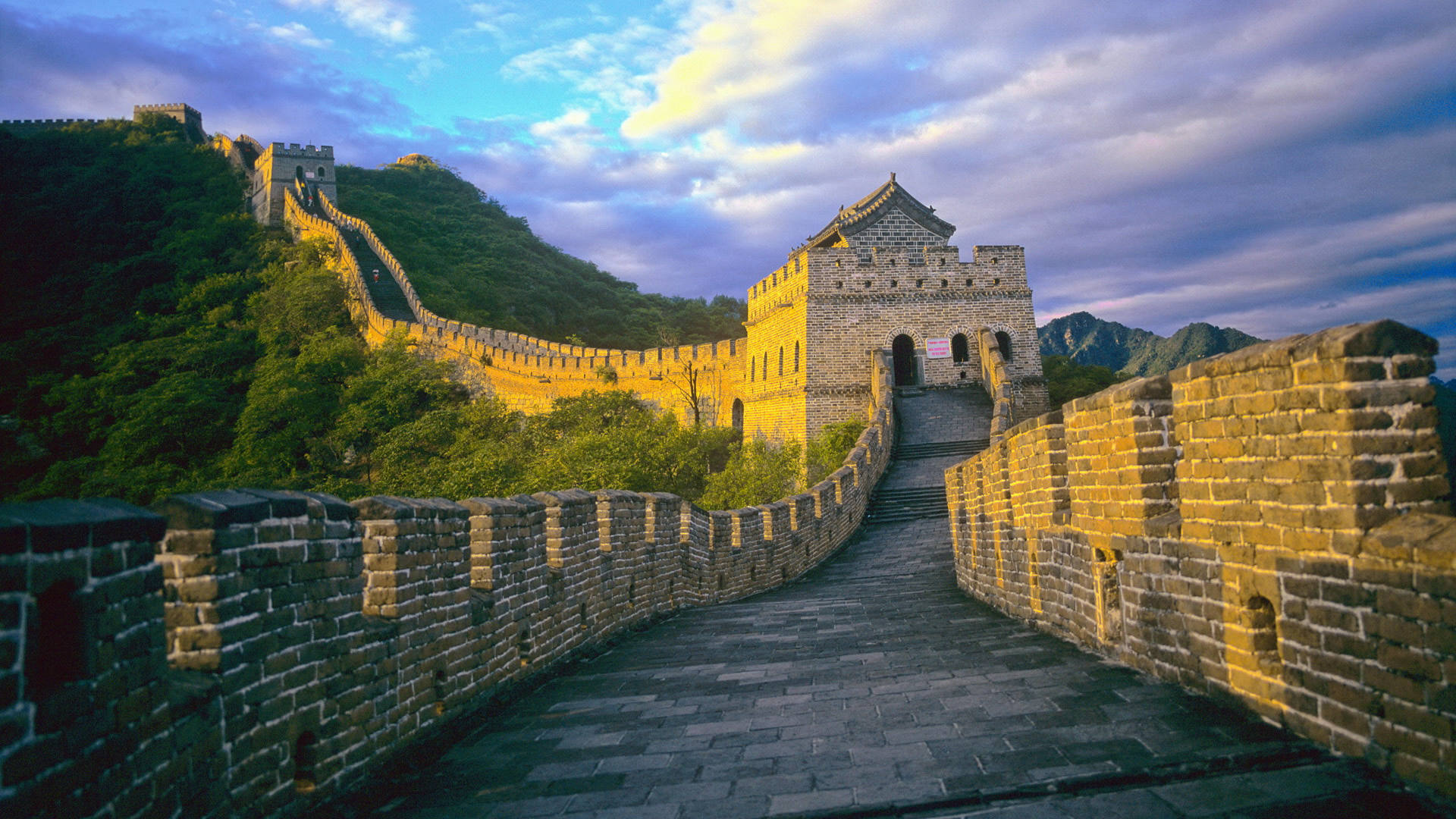
In Mandarin Chinese the 'Great Wall of China' is 万里长城. This means '10,000 li Great Wall' (one li is 500 meters long and the entire Great Wall is more than 21,000 kilometers). The Great Wall actually consists of many walls often parallel to each other. It is not one unbroken structure. The wall traces crestlines of mountains and hills and goes through the countryside. Around one fourth of the wall is made up of entirely natural barriers like rivers and mountain ridges. About 70% of the Great Wall is constructed wall and then the remaining amount is ditches or moats. Some of the wall is now in ruins or gone completely. It goes through 15 provinces, 97 prefectures, and 404 counties.
Britannica CNNWhy was it built?
The Great Wall developed over a long period of time. Much of it was built from an effort of individual Chinese kingdoms to fortify themselves from neighbors and barbarian invaders alike. Over history it was continuously built for three main purposes: “to protect the Chinese Empire from foreign invaders, act as a barrier between northern and southern civilizations, and protect the Silk Road Trade.” It was built by 19 dynasties over 2000 years, from 7th-century BCE to 16th CE. The credit for the Great Wall goes to the first emperor of the Qin dynasty, Qin Shi Huang. He is also referred to as the First Emperor. He united China around 220 BCE and put together the idea to unite all the existing walls into one.
National Geographic StudyThe Great Wall
Tourism
In 1987 the Great Wall was designated a UNESCO (United Nations Educational, Scientific and Cultural Organization) World Heritage Site. However, in 2004 there were reports that two-thirds of the Great Wall had been destroyed by developers, tourists, and erosion. "Booming tourism, development and lack of funds for protection are nibbling away the Great Wall," according to a Xinhua news agency. More recently, sections have been cut away to build highways and railways. Also, sections have been altered instead of preserved in order to support the tourism occurring.
Timeline of Restoration The Guardian