Pandas
About Pandas
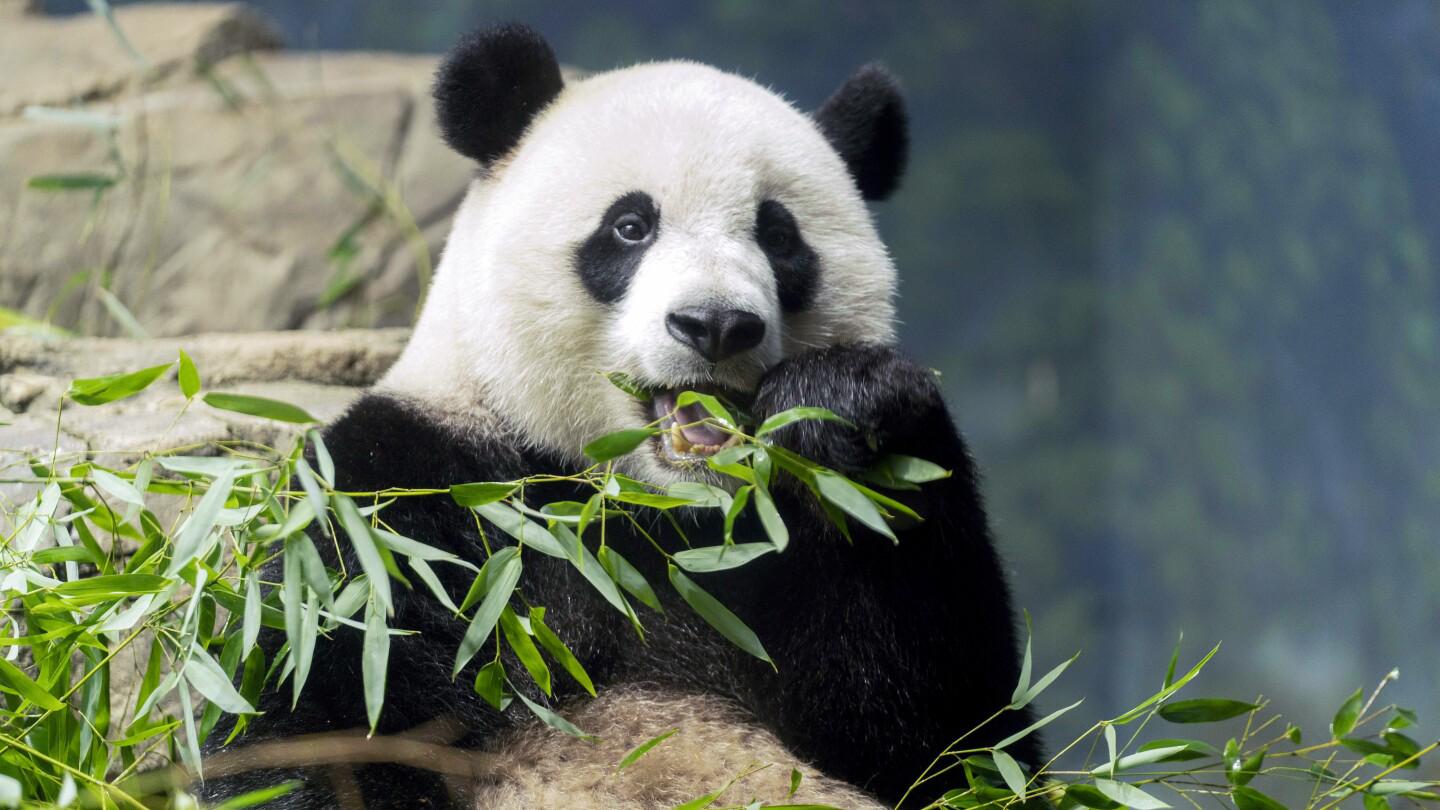
Giant pandas largely live in mountainous areas of southwest China. Their diet is mainly bamboo and they must eat between 26 to 84 pounds of it each day (this range is dependent upon what part of the bamboo they eat). Despite bamboo being most of their diet, pandas have a digestive system which is unable to digest cellulose, which makes up bamboo. Pandas in the wild live for about 14 to 20 years, though in captivity they can live for up to 30 years. They are solitary animals outside of breeding seasons. Interestingly, pandas do not have thumbs but they have enlarged wrist bones that act as thumbs and improve their dexterity. Pandas have long been beloved by China, and people of many other countries as well.
World Wildlife Org BritannicaExtinction and Protection
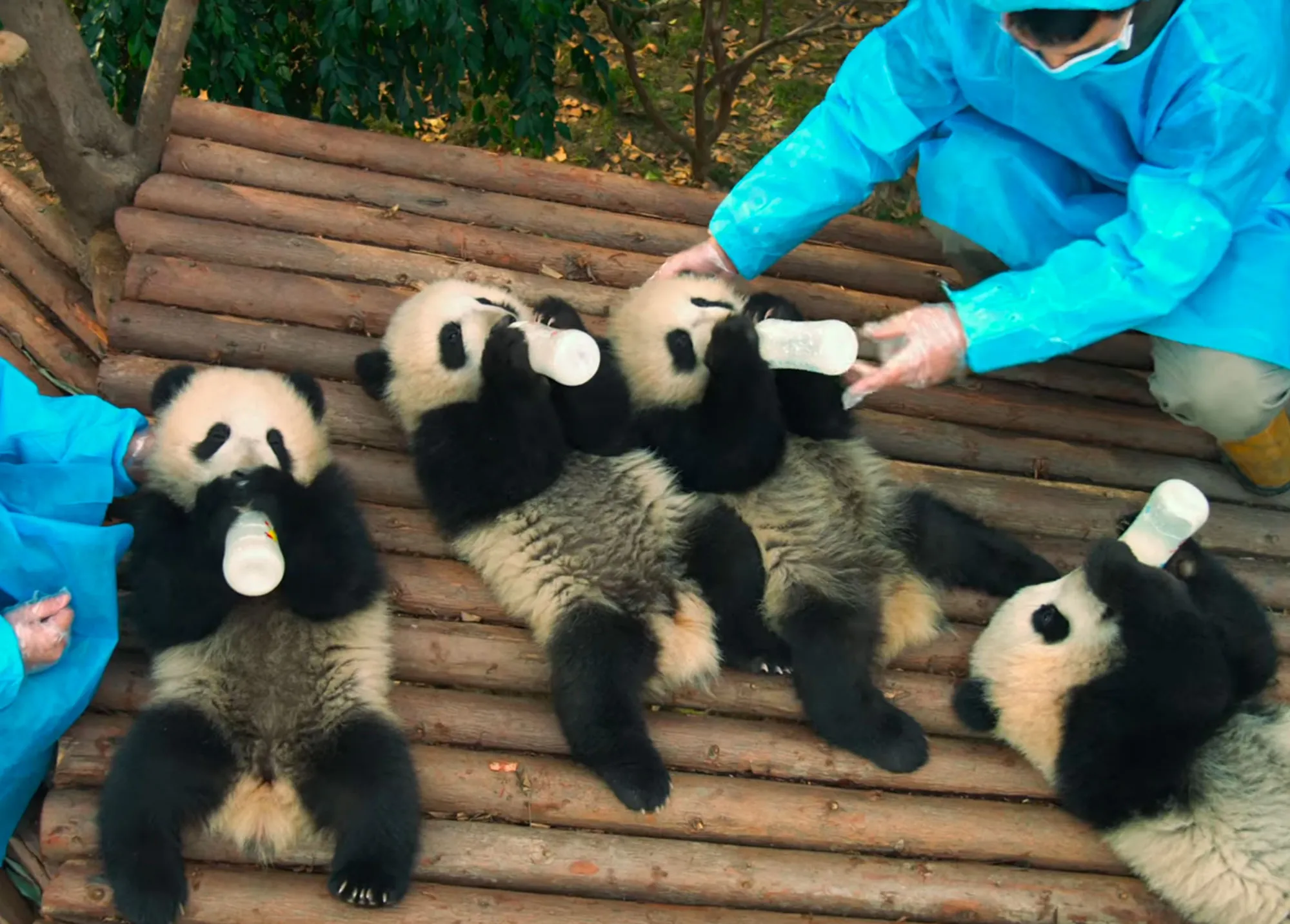
It is believed that there are under 1,900 pandas in the wild. For a long time pandas were considered endangered, though in 2016 their status changed to vulnerable, which is a step up from endangered. Their population is rebounding a bit, largely due to help from humans. There have been worldwide conservation efforts to try to protect pandas and help the population grow. Unfortunately, they still face problems such as habitat destruction, low birth rates, bamboo shortages, and hunters. Low reproduction rates for pandas is a large problem and humans have not figured out a way to really improve these rates, which is worrying. China has put in place programs which protect panda habitats, created panda reserves, and created policies and programs which are meant to help protect pandas. Their numbers are slowly increasing, but pandas are still rare and conservation efforts must persist.
World Wildlife Org San Diego ZooReturning to China
All pandas are protected by law and are Chinese citizens. For decades the China Wildlife Conservation Association has loaned out pandas as a sort of “panda diplomacy”. Pandas have been sent from China to the Smithsonian National Zoo, Atlanta Zoo, Memphis Zoo, and San Diego Zoo and the time the pandas stayed in these zoos was often extended. Through these agreements there is human collaboration and discussion of how to help conserve the panda population. However, when the agreements do eventually end the pandas return to China. All pandas born abroad are still considered Chinese and are to be sent back to China before turning 4 years old. The Atlanta Zoo is the only zoo in the United States that still has pandas from China, but their agreement ends in 2024 and those pandas are set to return home to China. This would have left the United States without any giant pandas for the first time since 1972. However, the San Diego Zoo met with conservation partners from the China Wildlife Conservation Association and will be receiving 2 new giant pandas. The pandas have been goodwill ambassadors for China and have helped boost the country's image internationally and improve relations between China and the countries they have panda loan agreements with.
CBS Washington PostPandas